
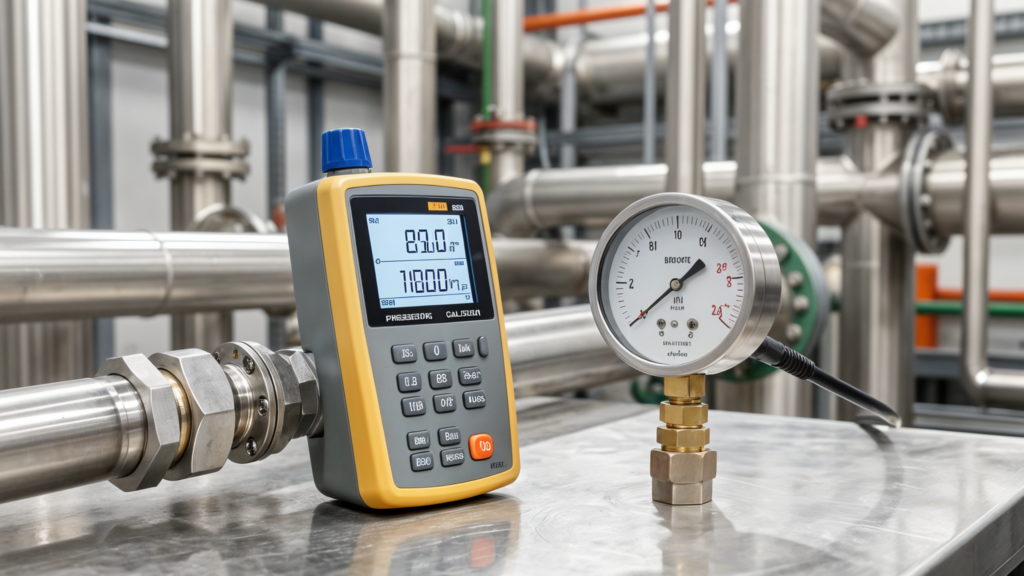
Pressure Calibrator Supplier: Key Findings
In oil and gas operations, pressure is the process variable that production, protection, and profitability all depend on. A transmitter that reads 0.1% high can hold back production; one that reads low can delay a shutdown response by seconds that matter. Yet many maintenance teams choose their pressure calibration equipment with less care than they choose the instruments they calibrate. When you are building or refreshing a calibration program, the pressure calibrator supplier you work with matters as much as the hardware itself. This article covers what to evaluate in a supplier, which equipment categories matter for oil and gas, and how to get the documentation and support your audits will demand.
Pressure Calibrator Supplier is the main subject of this practical guide. Use the information below to compare specifications, real-world fit, and limitations before making an equipment decision.
Why Pressure Calibration Matters in Oil & Gas
Pressure is measured everywhere in upstream, midstream, and downstream operations: wellheads, separators, pipelines, compressors, and process units. When those measurements drift, the consequences are rarely theoretical:
- Safety systems. Pressure transmitters and switches feed emergency shutdown (ESD), relief, and compressor protection systems. A calibrated reading is part of the safety barrier, and plant standards typically require documented proof of calibration.
- Process control. Separators, compressors, pumps, and pipeline stations run on pressure control loops. Accurate calibration keeps loops stable and avoids wasted energy, off-spec product, and unnecessary trips.
- Custody transfer and fiscal metering. Where hydrocarbons are measured for sale, pressure correction affects the bottom line directly. Calibrated pressure references are a standard part of metering verification.
- Compliance and audit. ISO 9001 quality systems, ISO/IEC 17025 laboratory requirements, and many plant-specific standards require calibration records traceable to national or international standards.
- Reliability and uptime. A drifting instrument causes false trips and missed trips, and both cost production. Regular calibration with a dependable reference catches drift before it becomes a failure.
Common Calibration Challenges in Oil and Gas
Before choosing a supplier, it helps to name the challenges that make oil and gas calibration different from general industrial work:
- Wide pressure ranges. A single site can span vacuum, low-pressure gas, and high-pressure hydraulic service. The supplier should help you match ranges and media across the whole site, not just sell one popular model.
- Harsh environments. Heat, vibration, dust, rain, and offshore humidity all affect field instruments and the calibrators used near them. Equipment must be rugged and, in classified areas, appropriately rated.
- Remote and offshore logistics. If a calibrator is missing a fitting or a battery on a platform, the next opportunity to bring one may be weeks away. Complete accessory kits and reliable delivery matter.
- Multi-brand instrument populations. Sites often run transmitters from several manufacturers. Calibrators with broad signal coverage and HART capability simplify the work.
- Audit pressure. Certification bodies and plant inspectors look at traceability chains, certificates, and records. Weak documentation from a supplier becomes your problem at audit time.
What to Look For in a Pressure Calibrator Supplier
Depth of Product Range
A single supplier should cover the whole pressure chain: portable field calibrators for loop checks, bench calibrators for workshop work, deadweight testers for laboratory references, and digital or analog pressure gauges for verification and indication. Sourcing everything from one supplier simplifies training, spares, and certificate management. Browse our pressure calibrators category for field and bench options, and the deadweight testers category for primary references.
Accuracy and Traceability
Understand the accuracy statement, not just the headline number. A digital pressure calibrator with 0.05% FS accuracy or better is common in modern instruments, but the full specification includes temperature effects, long-term stability, and the calibration certificate that ships with the unit. Ask whether the instrument includes a calibration certificate, how that certificate is traceable, and what the recommended recalibration interval is. For laboratory work, deadweight testers provide a gravity-based reference that depends on mass and local gravity rather than on an electronic sensor.
Traceability is a chain, not a single document: the field calibrator is checked against a reference, the reference against a primary standard such as a deadweight tester, and the primary standard itself against national or international standards through an accredited laboratory. A supplier that understands this chain — and can explain where each instrument sits in it — is easier to work with at audit time.
Genuine Products and Brand Coverage
Oil and gas teams usually standardize on proven brands. A supplier that carries Fluke, Druck (Baker Hughes), Additel, Megger, Keysight, and FLIR can match the brand your site already uses and supply genuine units with manufacturer warranty. Gray-market or unbranded instruments may cost less upfront and cost far more in a failed audit.
HART and Communication Capability
Most transmitters in oil and gas are smart instruments carrying HART, a digital protocol that rides on top of the 4-20 mA loop. A pressure calibrator with HART capability lets a technician read the process variable digitally, configure ranges, and verify the loop in a single pass. If your instrument population is HART-based, confirm that the supplier’s calibrators support it.
Technical Support and After-Sales Service
Calibration equipment fails at the worst times. Evaluate technical support before you buy: application advice during selection, repair turnaround, recalibration service, and spare parts availability. Ask how warranty claims are handled and whether repaired units come with fresh certificates.
Lead Time and Inventory
Planned shutdowns and turnarounds drive most oil and gas calibration work, and the schedule does not move for a back-ordered pump or calibrator. A supplier with regional stock and predictable lead times protects your maintenance window.
Documentation and Training
Manuals, certificate packages, loop-check procedures, and operator training reduce the time between delivery and productive use. Ask what documentation ships with the equipment and whether the supplier offers training on the products they sell.
Building the Right Pressure Calibration Package
Most oil and gas sites do not need a single instrument; they need a family of them matched to the work:
- Portable field calibrators for on-site transmitter and switch verification, from the pressure calibrators range.
- Digital pressure gauges for quick loop verification and accurate indication where a full calibration is not required.
- Analog pressure gauges where a simple mechanical indication is preferred, such as local panel indication.
- Deadweight testers as the laboratory reference for the highest-accuracy work.
- Bench and general calibration instruments for the workshop.
A common pattern is to keep a deadweight tester in the calibration laboratory, use bench instruments for workshop calibrations, and equip field teams with portable calibrators. Digital pressure gauges ride along for quick checks and round out the package without the cost of a full calibrator at every location.
A Supplier Checklist for Your Next Purchase
- Accuracy: does the full specification meet your test uncertainty requirements?
- Traceability: are calibration certificates included and traceable to recognized standards?
- Compatibility: does the calibrator support HART and match your transmitter population?
- Range and media: pneumatic or hydraulic, and does the range cover your process pressures?
- Service: what is the repair and recalibration turnaround?
- Lead time: can the supplier deliver before your next scheduled maintenance window?
- Warranty and support: what is covered, and who answers technical questions?
Choosing a Pressure Calibrator Supplier
When evaluating a pressure calibrator supplier, compare technical advice, product authenticity, calibration certificates, delivery support, and after-sales service. The right pressure calibrator supplier should help match the instrument to your pressure range, media, uncertainty target, and plant safety requirements.
For a planned maintenance program, the pressure calibrator supplier should also explain which equipment is suitable for field checks, workshop calibration, and laboratory reference work. This makes the quotation easier to evaluate and avoids choosing equipment based only on headline price.
Working With Indo Multimeter
Indo Multimeter supplies calibration and test equipment from manufacturers such as Fluke, FLIR, Druck (Baker Hughes), Keysight, Additel, and Megger. The range covers pressure calibrators, digital and analog pressure gauges, deadweight testers, communicators, and general calibration instruments, so a site can source its pressure calibration program from one supplier.
Need to equip a site or refresh a calibration program? Tell us your pressure ranges, accuracy requirements, and preferred brands, and we will prepare a quotation for you. Request a quotation today.
Editorial note: This guide was prepared by the Indo Multimeter Editorial Team for engineers and technicians researching test, measurement, and calibration equipment. Specifications and application guidance should be checked against the manufacturer documentation and the requirements of your calibration procedure.
Related Calibration Guides
- Field Calibration Essentials: What's in a Calibration Technician's Kit
- HART Communicator Price Guide: Fluke 754 and Alternatives
- Pressure Transmitter Calibration: Smart vs Analog
- How to Choose a Pressure Calibrator: Field, Bench, or Lab
Pressure Calibrator Supplier: Official Manufacturer Resources
For current specifications and product status, compare the Fluke pressure calibrator range with the requirements of your procedure. Always verify accuracy, pressure range, media compatibility, safety rating, certificate, and warranty in the manufacturer documentation before purchase.