
Test & Measurement Blog · 23 Aug 2026
Pneumatic vs. Hydraulic Pressure Calibrators: Choosing the Right Tool for Field and Lab
Pneumatic vs hydraulic pressure calibrator: use a pneumatic (gas) calibrator for vacuum, low and medium pressure and for any device that must stay clean and dry. Use a hydraulic (liquid) calibrator when you need high pressure, generally above the roughly 60 to 100 bar that hand-pumped gas handles comfortably. Hydraulic pumps build pressure faster and with less force because the liquid does not compress, while pneumatic systems add no oil or water to the device under test.
What are the core differences between pneumatic and hydraulic calibrators?
| Feature | Pneumatic | Hydraulic |
|---|---|---|
| Medium | Clean, dry air or nitrogen | Mineral oil or distilled water, depending on the pump |
| Typical range | Vacuum and overpressure up to about 60 bar; hand pumps are typically limited below 100 bar | Near zero up to above 1,000 bar |
| Effort for high pressure | Rises quickly, because gas compresses | Low, with a screw press or lever pump |
| Contamination of the device | None from the medium, if the gas is clean and dry | Oil or water residue can remain in the device and process connection |
| Stored energy | High at pressure, so a failure releases more energy | Lower, though leaks and hose failure are still hazards |
| Stability | Volume, temperature and leaks cause drift, more so with large volumes | Stable, unless air bubbles are trapped in the liquid |
The ranges follow the comparison in SIKA’s pressure calibration guide, and the stability and stored energy points follow ICS Schneider. Real products differ, so always check the datasheet of the pump or calibrator you plan to buy.
When should you choose a pneumatic pressure calibrator?
Pneumatic calibration suits vacuum, low and medium pressure, on-site work and clean devices. ICS Schneider lists differential pressure and low-range pressure switches among the typical jobs. A practical example is the Fluke 700PTP-1 pneumatic test pump, which Fluke’s archived datasheet gives as capable of up to 600 psi (40 bar) for use with 700 series pressure modules or test gauges.
- Clean service. No liquid enters the device. This is the preferred route for food, pharmaceutical, semiconductor and oxygen applications, where oil or water residue is unacceptable.
- Portability. Hand pumps and modular pressure calibrators are light enough to carry onto a plant structure.
- Fine control at low pressure. Compressible gas lets you trim the pressure finely on draft ranges and low-range differential transmitters.
Limits: pumping gas by hand above a few tens of bar takes a lot of effort, and compressed gas stores more energy than liquid. Large test volumes and long hoses make the reading drift as temperature changes.
When should you choose a hydraulic pressure calibrator?
Hydraulic pumps and comparators are the tool for high-pressure gauges, hydraulic components and ranges above the usual pneumatic limit. For example, the Fluke 700HTP-2 hydraulic test pump is described by Fluke as a hand-operated pump for calibration pressures up to 10,000 psi (690 bar), using distilled water or mineral-based hydraulic oil.
- High pressure with little effort. A screw press or lever pump reaches hundreds of bar by hand.
- Lower stored energy. Liquid stores less energy than the same volume of gas at the same pressure. Treat leaks and hose failures at high pressure as serious hazards anyway.
- Stable readings. With air bled out of the circuit, the pressure holds steady for comparing a test gauge with a reference.
Limits: oil can contaminate a device that later sees process media that must stay oil-free. Check media compatibility first, use a water-filled comparator where the device must stay oil-free, and clean the device afterwards if required. Trapped air makes the circuit springy and hard to adjust, so prime and vent the system carefully.
Which type suits which application?
| Application | Better choice | Why |
|---|---|---|
| Cleanroom, HVAC and low differential pressure | Pneumatic, low-pressure pump | Fine adjustment, no liquid |
| General process transmitters (4-20 mA HART) | Pneumatic, up to the transmitter range | Fast, clean, portable |
| Vacuum and compound gauges | Pneumatic | Hydraulic pumps are not made for vacuum work |
| High-pressure gauges, relief valve tests, hydraulic lines | Hydraulic | Pressure reached with low effort and lower stored energy |
| Oxygen or ultra-pure gas service | Pneumatic, with cleaned equipment | Oil there needs explicit approval |
| Gauge comparison on a bench | Hydraulic comparator, often water-filled | Stable pressure and easy fine adjustment |
How do you get a stable, repeatable reading with either type?
- Leak-test first: pressurise, isolate the source and watch for a falling reading before you start measuring.
- Keep the volume small. Use short hoses and the smallest adapter set that fits.
- Wait after each step until the reading settles, particularly with gas after fast pressure changes.
- With liquid, prime the circuit and bleed all air before building pressure.
- Use the pump’s fine adjustment (a vernier or screw press) for the final approach to each test point.
- Vent slowly when you finish, and never exceed the pump or device pressure rating.
For the full gauge routine, see our pressure gauge calibration procedure. For selecting the reference itself, read how to choose a pressure calibrator and deadweight tester vs digital pressure calibrator.
Where can you find pressure calibration equipment?
- Digital pressure calibrators and gauges: reference standards with multi-range pressure modules.
- Pressure test pumps and gauge comparators for generating and comparing pressure.
- Industrial test and measurement equipment: the full catalogue of electrical, temperature and process instruments.
- Need advice on ranges or accessories? Ask our technical team for a quote or datasheet.
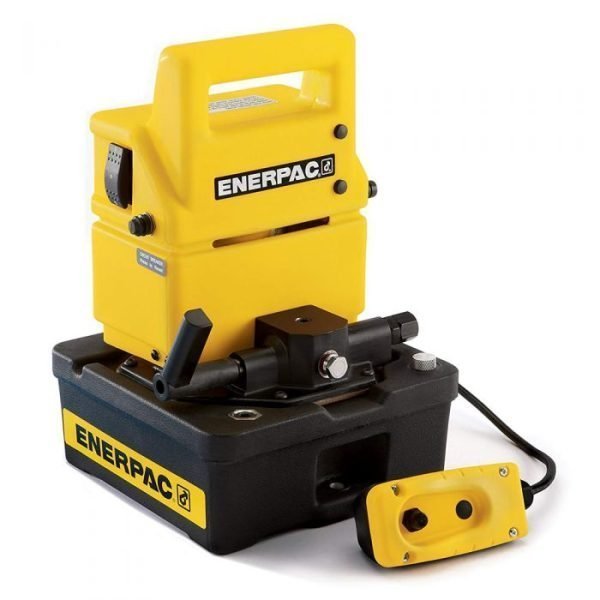
Looking for this instrument? IndoMultiMeter supplies pneumatic pressure calibrators and the Enerpac PUJ1200B Ultra-High Pressure Hydraulic Pump, 1200 Bar, 2-Stage. Browse our full range of test & measurement instruments, shipped worldwide.
Frequently asked questions
What pressure is too high for a pneumatic calibrator?
There is no universal limit, but sources put pneumatic pumps at overpressure up to about 60 bar as a rule, and hand pumps are typically limited below 100 bar by the effort needed. Beyond that, a hydraulic pump is easier and, because liquid stores less energy, usually safer. Always stay inside the rated pressure of the pump and the device under test.
Can I use water in an oil-based hydraulic comparator?
Not unless the manufacturer approves the pump for water. Water can corrode internal parts and degrade seals in a pump built for oil. Use a pump designed for distilled water, such as a water-filled comparator, when the device must stay oil-free.
Why does my pneumatic reading keep drifting?
Gas is compressible, so volume changes, small leaks, temperature changes and hose movement all shift the pressure, and larger test volumes make it worse. Shorten the hoses, leak-test, let the reading settle, and use a fine-adjust pump or volume adjuster for the last step.
Can I use a nitrogen cylinder for pneumatic calibration?
Yes. A cylinder with a regulator removes the manual pumping and supplies clean, dry gas at a steady pressure. The usable range is set by the regulator and fittings, so check their ratings against the pressure you need.
Which type should I use for oxygen service?
Use a pneumatic setup with clean, oil-free equipment. ICS Schneider notes that oil must not be used in oxygen or other sensitive service without explicit approval, and the device and fittings must be cleaned to the site procedure.