
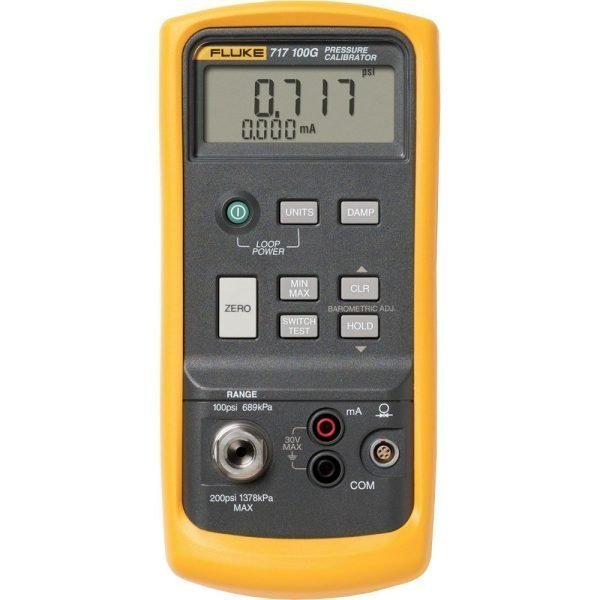
Fluke 717-300g: Key Findings
If you maintain pressure instrumentation in the field, you already know the difference between a calibrator you can trust and one that just looks good on a spec sheet. The Fluke 717-300G sits firmly in the first camp. In this review we look at what it does well, where it falls short, and who should buy it.
Fluke 717-300g is the main subject of this practical guide. Use the information below to compare specifications, real-world fit, and limitations before making an equipment decision.
Overview
The Fluke 717 series is a compact, handheld pressure calibrator with an internal pressure sensor and an electric pump-free design: you connect an external hand pump, and the 717 handles measurement, mA sourcing/simulation, and pressure switch testing. The 300G variant covers -12 to 300 PSI (-850 mbar to 20 bar) with 0.05% of full scale pressure accuracy and 0.015% mA accuracy.
Key Specifications
- Pressure range: -12 to 300 PSI gauge
- Pressure accuracy: 0.05% FS
- mA measurement/source: 0-24 mA, 0.015% accuracy
- Loop power: 24 V DC for transmitters under test
- Pressure switch test mode with captured set/reset points
- Single 9V battery operation, -10 C to 55 C operating range
- Compact, rugged holster design; 3-year warranty
What We Like
- Field-friendly size. Genuinely one-hand operation; it disappears into a tool bag next to your pump.
- Switch test mode. Automatic capture of setpoint, reset, and deadband saves real time on PSV and switch checks.
- Transmitter loop support. Built-in 24 V loop supply means one less box on the bench.
- Fluke durability. The rubber holster and sealed keypad survive plant floors.
Where It Falls Short
- No internal pump – you need a hand pump (e.g. Fluke 700LTP) for pressure generation.
- 0.05% FS is solid but not lab-grade; metrology labs will want a 0.025% unit like the Additel ADT672 series.
- Single pressure module range per unit – wide-range work needs multiple models or external modules.
Who Should Use the Fluke 717-300G?
The Fluke 717-300G is best suited to maintenance technicians, commissioning teams, and instrument workshops that regularly test pressure transmitters, gauges, and pressure switches in the field. Its compact body and external-pump design make it practical when the worksite is spread across a plant or when a full bench calibrator would be too bulky to carry.
Before ordering, confirm the expected pressure range, test media, required uncertainty, fittings, and whether the procedure needs loop power or mA simulation. The 717-300G covers a useful 300 PSI gauge range, but it is not a universal replacement for a higher-accuracy laboratory reference or a calibrator with a different pressure module.
Fluke 717-300G: Field Use and Limitations
In a typical transmitter check, the technician connects the 717-300G to the pressure source, supplies the loop when required, applies test points across the range, and records as-found and as-left readings. A documented checklist should include the reference accuracy, ambient conditions, fittings, pressure medium, and acceptance tolerance. That information makes the result easier to review and repeat during the next maintenance cycle.
The main trade-off is simplicity: the external hand pump keeps the calibrator compact, but it adds another item to the kit. For high-volume bench work or very tight uncertainty requirements, compare a bench or laboratory reference instead. For portable loop checks and switch testing, the 717-300G remains a practical choice when its range and accuracy match the procedure.
Verdict
The Fluke 717-300G is one of the best values in handheld pressure calibration for maintenance and commissioning techs. It is not a lab standard, but for loop checks, transmitter verification, and switch testing in the 0-300 PSI band, it is hard to beat. Rating: 4.5/5.
Check price and availability of the Fluke 717-300G here.
Fluke 717-300g: Official Manufacturer Resource
For current specifications, compatibility, and product status, consult the official Fluke 717 pressure calibrator information. Manufacturer documentation should take priority over third-party summaries when checking accuracy, operating limits, safety ratings, and included accessories.
Editorial note: This review was prepared by the Indo Multimeter Editorial Team for equipment research. Verify current specifications, availability, warranty, and manufacturer status before purchase.