
Test & Measurement Blog · 04 Sep 2026
Measurement Company: Functions, Standards & Selection
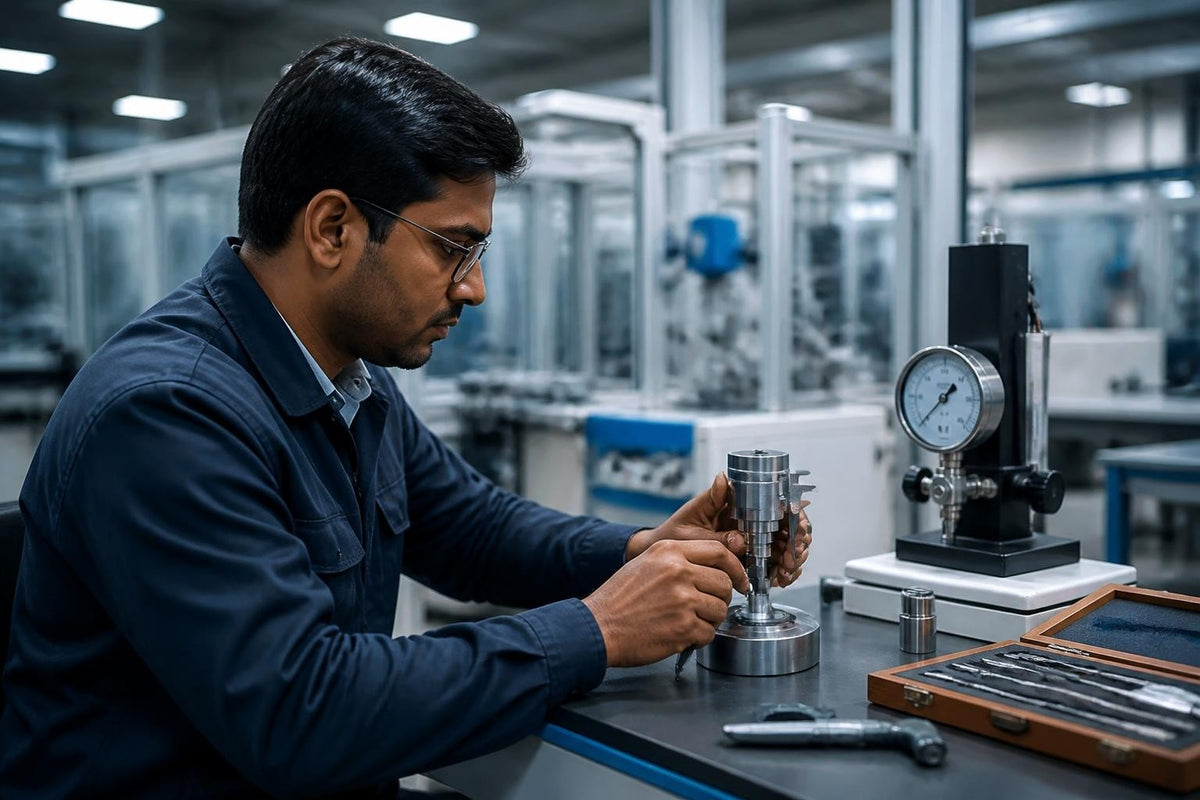
A measurement company serves as a critical intermediary between fundamental metrological standards and industrial applications, providing the instruments, calibration services, and technical expertise required to maintain measurement accuracy across manufacturing, quality control, and regulatory compliance workflows. These organizations bridge the gap between national measurement institutes and end-users, ensuring that measurements taken in factories, laboratories, and field environments remain traceable to recognized international standards. For industrial sectors operating under strict environmental conditions and local compliance frameworks, selecting the right measurement company directly impacts product quality, operational efficiency, and regulatory adherence.
Role and Functions of a Measurement Company
A measurement company operates across multiple dimensions of the metrological ecosystem. Primary functions include instrument supply, calibration services, technical support, and compliance consulting. Each function requires specialized knowledge of measurement physics, standards interpretation, and application-specific requirements.
Instrument Provision and Distribution
The core offering centers on supplying calibrated measurement instruments tailored to specific industrial applications. This includes thermal imaging cameras for predictive maintenance, digital pressure gauges for process control, and oscilloscopes for electronic testing. A competent measurement company maintains relationships with multiple manufacturers while providing local inventory, warranty support, and application guidance.
- Pre-calibrated instruments with traceable certification
- Application-specific configuration and setup
- Spare parts and consumables availability
- Firmware updates and technical bulletins
- Local stock for reduced lead times
Selection criteria for instrument portfolios should prioritize environmental compatibility, particularly for tropical climates where humidity, temperature variation, and atmospheric conditions affect sensor performance and electronic stability.
Calibration Services and Traceability
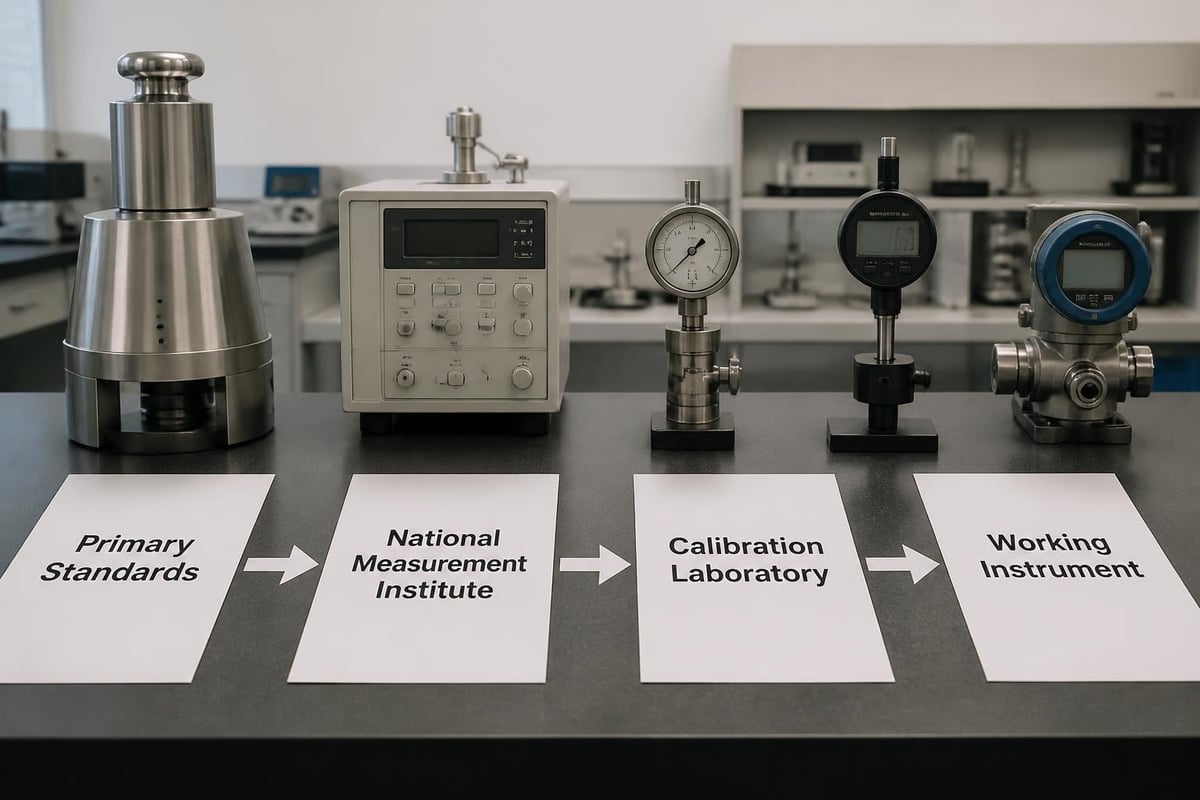
Calibration represents the technical foundation of measurement company operations. Services extend from basic single-point checks to comprehensive multi-parameter characterization with full uncertainty analysis. The BIPM Annual Review documents international cooperation frameworks that enable national traceability chains, which measurement companies must access through accredited laboratory relationships.
| Service Type | Typical Parameters | Turnaround | Documentation |
|---|---|---|---|
| On-site calibration | Temperature, pressure, humidity | 1-2 days | Certificate + report |
| Laboratory calibration | Electrical, dimensional, force | 5-10 days | Full uncertainty budget |
| Witness calibration | Critical process instruments | 3-5 days | Witnessed certificate |
| Emergency service | Production-critical equipment | Same day | Abbreviated certificate |
Accreditation to ISO/IEC 17025 ensures that calibration procedures, uncertainty calculations, and quality systems meet internationally recognized requirements. For Indonesian industrial applications, local accreditation through Komite Akreditasi Nasional (KAN) provides additional regulatory recognition.
Technical Support and Application Engineering
Beyond instrument supply, a measurement company provides ongoing technical expertise. Application engineers assist with measurement system design, troubleshooting, and optimization. This function becomes particularly critical when adapting measurement solutions to unique environmental or process conditions not addressed in manufacturer specifications.
Technical support encompasses:
- Pre-sales consultation on instrument selection and specification
- Installation support including mounting, integration, and commissioning
- Training programs for operators and maintenance personnel
- Troubleshooting assistance for measurement anomalies
- Periodic review of measurement system performance
For industries requiring compliance with international legal metrology frameworks, technical staff must understand both measurement physics and regulatory requirements, bridging the gap between instrument capability and compliance documentation.
Standards Compliance and Regulatory Frameworks
A measurement company operates within a complex web of technical standards, industry regulations, and international agreements. Understanding this landscape enables proper instrument selection, calibration methodology, and documentation practices.
International Measurement Standards
The international measurement system relies on the International System of Units (SI), maintained through the Metre Convention and coordinated by the Bureau International des Poids et Mesures (BIPM). A measurement company ensures that all calibrations trace to SI units through an unbroken chain of comparisons, each with documented uncertainty.
Key standards frameworks include:
- ISO/IEC 17025: General requirements for testing and calibration laboratories
- ISO 9001: Quality management systems (incorporates measurement control)
- ISO 10012: Measurement management systems
- OIML Recommendations: Legal metrology for trade and regulatory applications
Different industries layer additional requirements onto these foundations. Pharmaceutical manufacturing demands compliance with Good Manufacturing Practice (GMP), which imposes strict calibration intervals and documentation protocols. Electronics manufacturing follows IEEE standards for specific measurement parameters such as signal integrity, electromagnetic compatibility, and sensor characterization.
Local Compliance Requirements
Indonesian industrial sectors operate under specific regulatory frameworks that influence measurement company selection. The Ministry of Trade enforces legal metrology requirements for trade measurement through the Directorate of Metrology. Manufacturing sectors face additional requirements from sector-specific regulators.
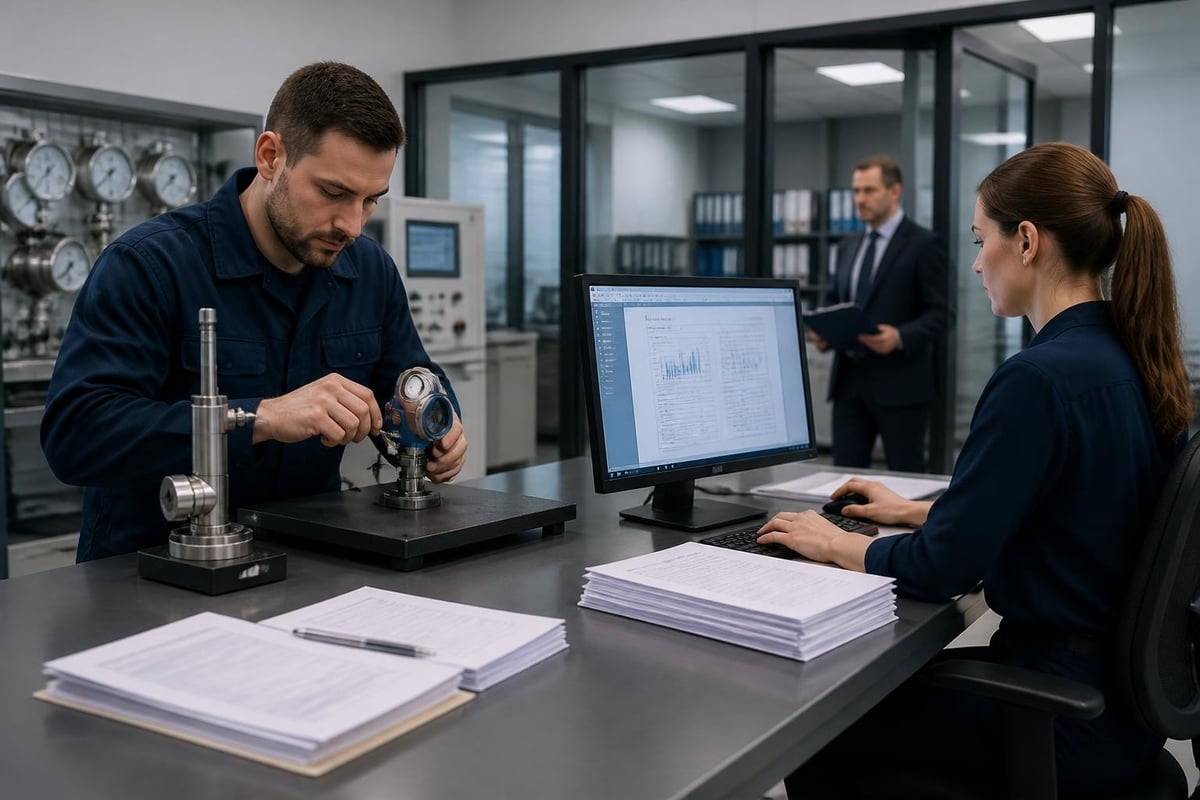
A measurement company serving Indonesian clients must navigate:
- Type approval for measuring instruments used in trade
- Verification and stamping for legal metrology applications
- Halal certification for food and pharmaceutical measurement equipment
- Environmental permits for testing facilities
- Import certification for measurement standards and reference materials
Understanding local environmental conditions proves equally important. Tropical humidity affects calibration stability for hygroscopic materials, electronic components, and pressure sensors. A competent measurement company accounts for these factors in uncertainty budgets and calibration procedures. Explore our laboratory equipment range to see products designed for demanding environmental conditions.
Selection Criteria for Industrial Applications
Choosing a measurement company requires systematic evaluation across technical capability, commercial terms, and long-term partnership potential. The decision impacts not only measurement accuracy but also production uptime, compliance risk, and total cost of ownership.
Technical Capability Assessment
Begin by verifying accreditation scope and technical competence. Request accreditation certificates and review the scope of accreditation to ensure coverage of required parameters and ranges. Not all measurement companies maintain equal capability across all measurement disciplines.
Evaluation checklist:
| Criterion | Evidence Required | Significance |
|---|---|---|
| Accreditation status | Certificate from national body | Legal and technical recognition |
| Calibration range | Scope of accreditation document | Coverage of required parameters |
| Uncertainty capability | CMC listings in accreditation | Achievable measurement quality |
| Traceability documentation | Calibration certificates for standards | Validity of traceability chain |
| Technical staff qualification | Resumes, training records | Competence for application support |
| Quality system certification | ISO 9001 certificate | Management system maturity |
Request customer references from similar industries and applications. A measurement company experienced in pharmaceutical process control brings different expertise than one focused on electrical power systems, even if both hold general accreditation for temperature and electrical parameters.
Service Delivery and Logistics
Practical considerations around service delivery directly impact production schedules and maintenance planning. Evaluate turnaround times, on-site service capability, emergency response, and geographic coverage.
For critical production equipment, verify:
- On-site calibration capability to avoid instrument removal
- Loan instrument programs to minimize downtime during off-site calibration
- Emergency service response times for unexpected failures
- Preventive maintenance schedules aligned with production planning
- Regional service centers for rapid response across multiple facilities
A measurement company with local presence and inventory can significantly reduce lead times compared to overseas suppliers, particularly important for tropical environments where instrument drift rates may accelerate due to environmental stress.
Commercial Terms and Total Cost
Purchase price represents only one component of total cost of ownership. Factor in calibration frequency, service charges, training costs, and potential downtime when comparing measurement company options.
- Initial instrument cost including accessories and documentation
- Calibration fees based on required frequency and parameters
- Service contract terms for preventive maintenance and support
- Training investments for operator and technician qualification
- Consumables and spare parts availability and pricing
- Upgrade paths for instrument firmware and capability expansion
Some measurement companies offer bundled pricing that combines instrument purchase with multi-year calibration services. Evaluate these arrangements carefully, considering instrument obsolescence, changing application requirements, and financial flexibility.
Industry-Specific Applications and Requirements
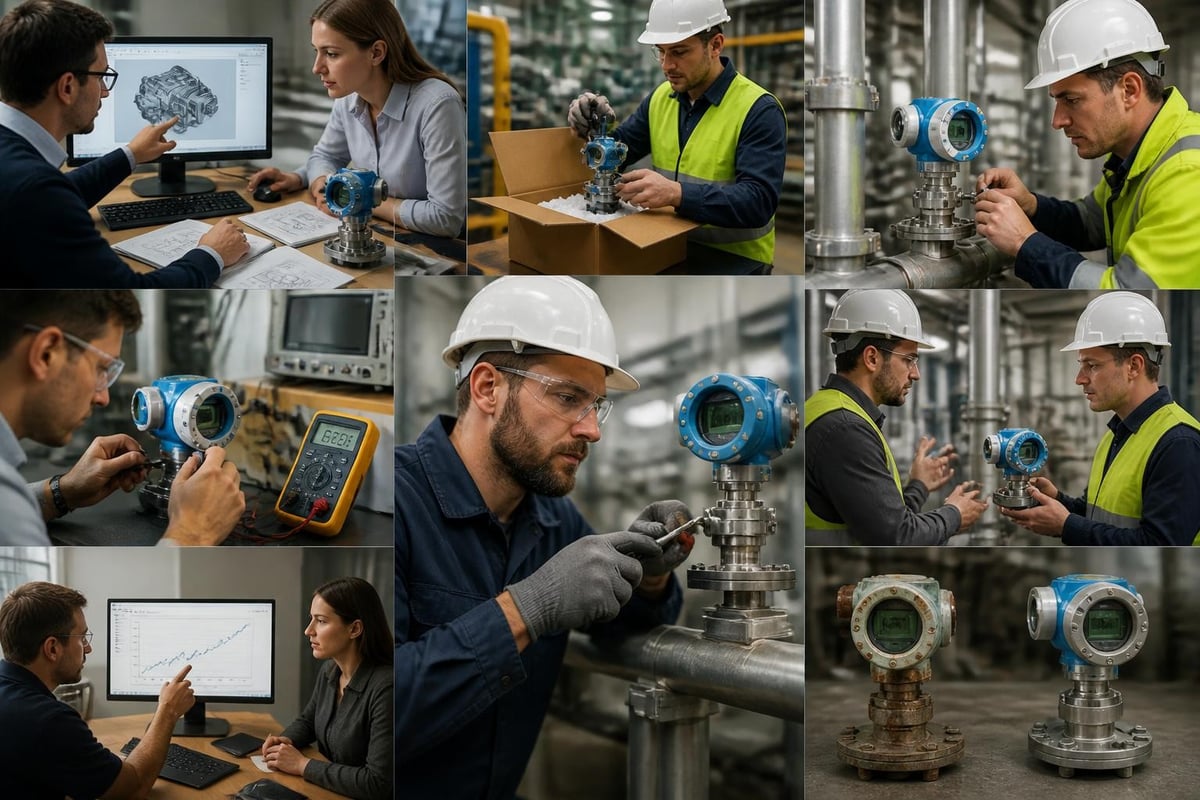
Different industrial sectors impose unique requirements on measurement systems and the companies that support them. Understanding these sector-specific demands enables better measurement company selection and partnership development.
Manufacturing and Process Control
Manufacturing environments demand robust instruments capable of continuous operation in challenging conditions. Process control measurements-temperature, pressure, flow, level-directly affect product quality and operational safety. A measurement company serving manufacturing must provide instruments rated for industrial environments with appropriate ingress protection, electromagnetic immunity, and mechanical durability.
Critical manufacturing measurements include:
- Temperature profiling for heat treatment and coating processes
- Pressure monitoring in hydraulic systems and compressed air networks
- Dimensional inspection for quality control and incoming inspection
- Electrical testing for motor control centers and power distribution
- Environmental monitoring for cleanrooms and controlled atmospheres
Calibration intervals in manufacturing typically range from quarterly to annual, with more frequent checks for critical safety instruments. Production schedules dictate that a measurement company must offer flexible scheduling and rapid turnaround to minimize impact on manufacturing output.
Laboratory and Research Applications
Analytical laboratories require higher accuracy levels and more comprehensive uncertainty documentation than typical industrial applications. Research applications may demand custom measurement solutions, extended range instruments, or specialized calibration procedures not covered by standard accreditation scopes.
Laboratory measurement companies differentiate through:
- Extended accuracy specifications beyond industrial-grade instruments
- Custom calibration points and multi-point characterization
- Specialized parameter coverage (pH, conductivity, optical properties)
- Integration with laboratory information management systems (LIMS)
- Method validation support for regulatory submissions
For pharmaceutical and medical device manufacturing, measurement systems must comply with Good Laboratory Practice (GLP) or Good Manufacturing Practice (GMP) requirements, which impose additional documentation, validation, and audit trail obligations.
Field Service and Remote Monitoring
Field applications present unique challenges related to environmental exposure, power availability, data logging, and remote accessibility. A measurement company supporting field applications must understand ruggedization requirements, battery technology, wireless communication protocols, and data management.
Field instrumentation priorities:
- Environmental protection against moisture, dust, and temperature extremes
- Power efficiency for battery-operated or solar-powered installations
- Data logging capacity with appropriate resolution and storage
- Communication interfaces for remote monitoring and control
- Calibration procedures suitable for field conditions
Thermal imaging cameras for electrical inspection, portable pressure calibrators for field verification, and handheld oscilloscopes for service technicians all require different support models than laboratory instruments. Visit our product categories to explore field-ready measurement solutions.
Quality Management and Continuous Improvement
A measurement company must maintain its own quality management systems while helping customers develop effective measurement control programs. This dual responsibility requires systematic approaches to quality assurance, technical competence maintenance, and continuous improvement.
Internal Quality Systems
ISO/IEC 17025 accreditation mandates comprehensive quality systems covering personnel qualification, equipment maintenance, method validation, and document control. Beyond minimum compliance, leading measurement companies implement additional quality practices that enhance service reliability and customer confidence.
Quality system elements:
- Proficiency testing participation to verify technical competence
- Interlaboratory comparisons for key measurement parameters
- Internal quality checks between routine calibrations
- Customer complaint tracking and corrective action implementation
- Continuous training programs for technical staff
Regular management review cycles ensure that quality systems adapt to changing customer needs, regulatory requirements, and technological capabilities. A measurement company should demonstrate evidence of continuous improvement through reduced uncertainty, expanded capability, and enhanced service delivery.
Customer Measurement Management Support
Beyond providing calibrated instruments, a measurement company contributes to customer quality systems by advising on measurement management practices. This includes calibration interval determination, measurement uncertainty budgeting, instrument selection optimization, and compliance documentation.
Support activities include:
| Service | Description | Customer Benefit |
|---|---|---|
| Measurement system analysis | Statistical evaluation of measurement repeatability and reproducibility | Quantified capability for quality control decisions |
| Uncertainty budget development | Systematic identification and quantification of uncertainty contributors | Realistic specification limits and accept/reject criteria |
| Calibration interval optimization | Risk-based determination of appropriate calibration frequency | Balance between compliance risk and calibration cost |
| Instrument rationalization | Review of measurement inventory for duplication and gaps | Optimized instrument portfolio and reduced total cost |
| Compliance audit preparation | Gap analysis against regulatory or standard requirements | Reduced audit findings and compliance risk |
These value-added services distinguish a strategic measurement company partner from a transactional supplier relationship.
Technology Trends and Future Directions
The measurement industry continues evolving through digitalization, automation, and new sensing technologies. A forward-looking measurement company invests in emerging capabilities while maintaining core competencies in traditional metrology.
Digital Calibration and Remote Services
Cloud-connected instruments enable remote calibration verification, continuous monitoring, and predictive maintenance. Digital calibration certificates with machine-readable formats (XML, JSON) integrate directly into quality management systems, reducing manual data entry and transcription errors.
Emerging capabilities include:
- Remote calibration verification through network-connected instruments
- Automated calibration scheduling based on actual usage patterns
- Predictive drift modeling to optimize calibration intervals
- Digital certificate management with blockchain verification
- Augmented reality support for field service and troubleshooting
A measurement company investing in these technologies provides customers with improved visibility, reduced downtime, and enhanced compliance documentation. However, digital systems also introduce cybersecurity considerations and data privacy requirements that must be addressed through appropriate controls.
Advanced Sensor Technologies
New sensing principles continue expanding measurement capability. Non-contact temperature measurement through thermal imaging, wireless pressure sensors with energy harvesting, and multi-parameter environmental monitors exemplify technological advancement in measurement instrumentation.
A measurement company must balance early adoption of proven technologies with prudent evaluation of emerging capabilities. Not all new technologies achieve the accuracy, stability, and reliability required for industrial applications, particularly in challenging environmental conditions.
Browse our product brands to discover the latest measurement technologies from leading manufacturers.
Selecting and partnering with the right measurement company directly impacts product quality, regulatory compliance, and operational efficiency across industrial and laboratory environments. By evaluating technical capability, service delivery, industry-specific experience, and quality systems, organizations can establish measurement partnerships that support both current requirements and future growth. IndoMultiMeter provides calibrated test and measurement instruments specifically designed for Indonesian environmental conditions, backed by technical expertise and local support to ensure your measurement systems deliver accurate, traceable results when and where you need them.