
Test & Measurement Blog · 30 Sep 2026
Electrical Test Instruments Every Instrument Technician Needs
The Electrical Test Instruments Every Instrument Technician Needs
Instrument technicians live between two worlds: the process signals that carry information and the electrical circuits that carry power. A technician’s toolkit has to cover both, from verifying a 4-20 mA transmitter output to checking insulation on a motor feeder. Buying the wrong electrical test instruments, or skipping one altogether, turns routine checks into guesswork and can put the technician at risk. This guide covers the essential electrical test instruments for instrument technicians, what each one is for, and how to choose.
1. Digital Multimeter: The Foundation Tool
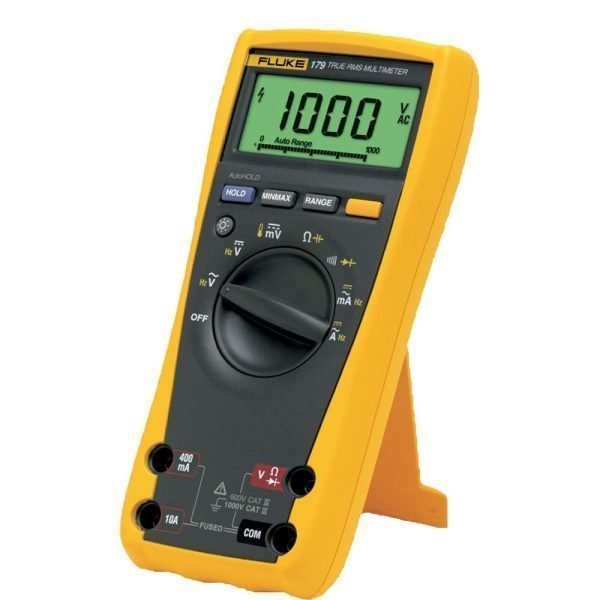
The digital multimeter (DMM) is the first electrical test instrument a technician owns and the one used most. It measures voltage, current, and resistance, and most models add continuity and diode checks. For instrument work, look for:
- True RMS AC measurement, so readings stay accurate on the non-sinusoidal waveforms common on motor drives.
- mA and mV ranges accurate enough for signal checking.
- Auto-ranging and a clear display with backlight for dark panels.
- Input protection and CAT ratings appropriate to the circuits you work on. CAT III is standard for distribution panels; CAT IV for service entrances.
- HART-compatible resistance if you will use it as a loop resistor while communicating with smart transmitters.
A good DMM from a brand such as Fluke or Keysight, both carried by indomultimeter.net, lasts for years and is the backbone of every job. If the budget allows, choose a meter with a backlit display and a magnetic hanger, two features that make field work noticeably easier when you are working alone on a dark panel.
2. Loop Calibrator or Process Meter
Most of the signals an instrument technician touches are 4-20 mA current loops, and a general-purpose multimeter is not the ideal tool for them. A loop calibrator sources and measures mA with the accuracy and stability the work needs, displays percent of span, provides 24 V loop power, and simulates a two-wire transmitter. If you calibrate or verify transmitters, a loop calibrator is not optional. Many technicians choose a process meter that combines mA source and measure with thermocouple and RTD simulation, covering temperature signals as well. See the loop calibrators category for the full range.
3. Megohmmeter and Insulation Tester
Instrument cables share trays with power cables, and insulation breakdown is one of the most common causes of erratic signals and ground loops. A megohmmeter (insulation tester) applies a high DC test voltage, typically 250, 500, or 1000 V, and measures the insulation resistance in megohms. It catches deteriorating insulation long before a fault develops. Insulation testing is part of commissioning new cable runs and of troubleshooting loops that behave strangely. Look for an instrument with selectable test voltages, a clear PASS/FAIL threshold display, and safety features such as automatic discharge after the test. Browse megohmmeters and insulation testers for options.
4. Clamp Meter: Current Without Breaking the Circuit
There are plenty of situations where you cannot interrupt a circuit to insert a meter: verifying the current drawn by a heater, a motor, or a solenoid while it runs. A clamp meter measures AC and DC current through the jaw without breaking the circuit. For instrument technicians, a clamp meter with low-range mA capability and a 4-20 mA setting is particularly useful for checking loop current without disconnecting the transmitter. Some models combine clamp measurement with a full multimeter, which is a practical choice when a separate DMM and clamp are overkill.
5. Thermal Imager for Electrical Inspection
Heat is the earliest visible symptom of most electrical problems: loose connections, overloaded conductors, and failing contacts all run hot before they fail. A thermal imager lets a technician scan a panel or junction box and see the hot spots in seconds. Thermal imaging is a standard part of predictive maintenance programs and is invaluable for finding intermittent faults that no meter reading can catch. FLIR, a brand carried by indomultimeter.net, builds thermal cameras from entry-level models to professional units with high thermal sensitivity and image analysis software.
6. Voltage and Continuity Tester for Daily Checks
For the everyday checks, a simple voltage and continuity tester is fast and rugged. Two-pole voltage testers verify the absence of live voltage before work begins, which is a safety step every technician should perform. A continuity tester or a DMM in continuity mode confirms wiring, fuses, and terminations. These tools are inexpensive, but they are the ones that get used fifty times a day.
Building Your Electrical Test Instrument Set
For a technician starting out, the practical minimum is a DMM, a loop calibrator or process meter, and a voltage/continuity tester. Add a megohmmeter and a clamp meter as your work requires insulation testing and live current checks. Add a thermal imager when your site runs predictive maintenance or when you troubleshoot recurring electrical faults. Most technicians also carry:
- Test leads with sharp probes and alligator clips, in a second color set for live and return.
- A spare set of batteries, since every handheld runs on them.
- Fuses for the meters, because a blown fuse ends the job early.
- A simple pouch or case that protects the instruments and keeps them clean.
Keeping Your Test Instruments Accurate
Every electrical test instrument is itself a measuring instrument that drifts, and most plants include them in the calibration program. A loop calibrator used to verify transmitters should be calibrated more often than a general-purpose DMM, because its accuracy directly affects every job it touches. Multimeters and clamp meters typically follow an annual calibration cycle, with more frequent checks for instruments used on critical measurements. Keep certificates and records for each instrument, and check the calibration status label before using a meter on an important job. An out-of-calibration meter is worse than no meter, because it gives you confidence in a wrong answer.
Safety First with Electrical Test Instruments
Electrical test instruments are safety devices as much as measuring devices. Follow the basics on every job:
- Use instruments with CAT ratings that match or exceed the circuit you are measuring.
- Inspect leads and probes for damaged insulation before connecting anything.
- Verify the absence of live voltage with a known-good tester before touching terminals.
- Never break a live 4-20 mA loop without the appropriate permit and approval, and confirm the loop is not in a safety function.
- Follow lockout/tagout procedures whenever a circuit must be de-energized for work.
- Store instruments so leads, fuses, and batteries stay in good condition.
Choosing Between Brands and Models
Stick to reputable manufacturers with proven safety certification and local support. Fluke, Keysight, Megger, and FLIR, all available through indomultimeter.net, publish accuracy specifications and safety ratings you can verify, and they support their products with documentation and service. Compare the accuracy you actually need: a multimeter specified at 0.5% is fine for most field checks, while calibration work justifies a 0.025% instrument. Match CAT ratings to the highest-energy circuit you will touch, not the one you usually touch.
Shop Electrical Test Instruments at indomultimeter.net
indomultimeter.net carries the full set: multimeters, loop calibrators, megohmmeters and insulation testers, and the complete electrical test instruments range from Fluke, Keysight, Megger, and FLIR.
Building a toolkit or replacing worn tools? Request a quotation and our team will help you assemble the right set for the work your plant does.